
Google’s new aggregator unit in the EU: what merchants need to know
Google has changed what shoppers see when they search for products in Europe. Since mid-September 2026, the previous version of free product listings has been removed from Google Search in the European Economic Area (EEA). Google can now show two new units in its place: an ‘aggregator’ unit with product results from comparison shopping services (CSSs), plus a separate ‘supplier’ unit for direct sellers.
For merchants, unpaid product visibility on Google Search now operates differently than before, and consumers will be shown comparison site results as well as direct merchants. This article sets out what has changed, why Google made the change, and what you can do now.
What has changed
Product searches made in the EEA can now return two units (Google Search Central).
- The aggregator unit shows listings from approved comparison services. For product searches, these are CSSs. The top-ranked provider’s results are expanded by default, with details such as photos and prices. Where alternative CSSs are available, shoppers can pick a different provider from a list, and only one aggregator unit appears at a time (aggregator unit). When clicking on the aggregator unit, users land on the product page of the CSS website showing the different retailer offers on that CSS for that product.
- The supplier unit gives direct providers their own placement. Google’s examples are individual hotels, airlines and brick-and-mortar businesses; for product searches, we expect this to mean retailers and brands. It only appears when an aggregator unit is also on the page (supplier unit). Results are similar in format to the aggregator unit, but are populated based on both crawled pages and information from feeds. When clicking, users go to the individual offer on the retailer’s site.
These units have replaced free product listings in Search results in the EEA. According to Search Engine Roundtable, Google’s Ads Liaison, Ginny Marvin, confirmed the removal followed from the DMA ruling.
For product searches, Google points CSSs to its CSS programme for showing product pages across Google (CSS Center Help). Google also says that clicks within the unit lead directly to that aggregator’s website (aggregator unit). In other words, a shopper who clicks a listing goes to the comparison site, where they can compare offers before choosing a shop.
| Element | Before September 2026 | Now, in the EEA |
|---|---|---|
| Free product listings | Shown in Search, built from Merchant Center data | Removed from Search results |
| Comparison sites | Shopping ads, web results and earlier DMA comparison units | A dedicated aggregator unit with listings from CSSs. Users land on the CSS website with multiple retailer offers shown. |
| Merchant websites | Free listings and web results | A supplier unit based on crawled pages, plus web results |
| Shopping ads | Paid placements, through Google Shopping or a CSS | Not mentioned in Google’s guidance on these units |
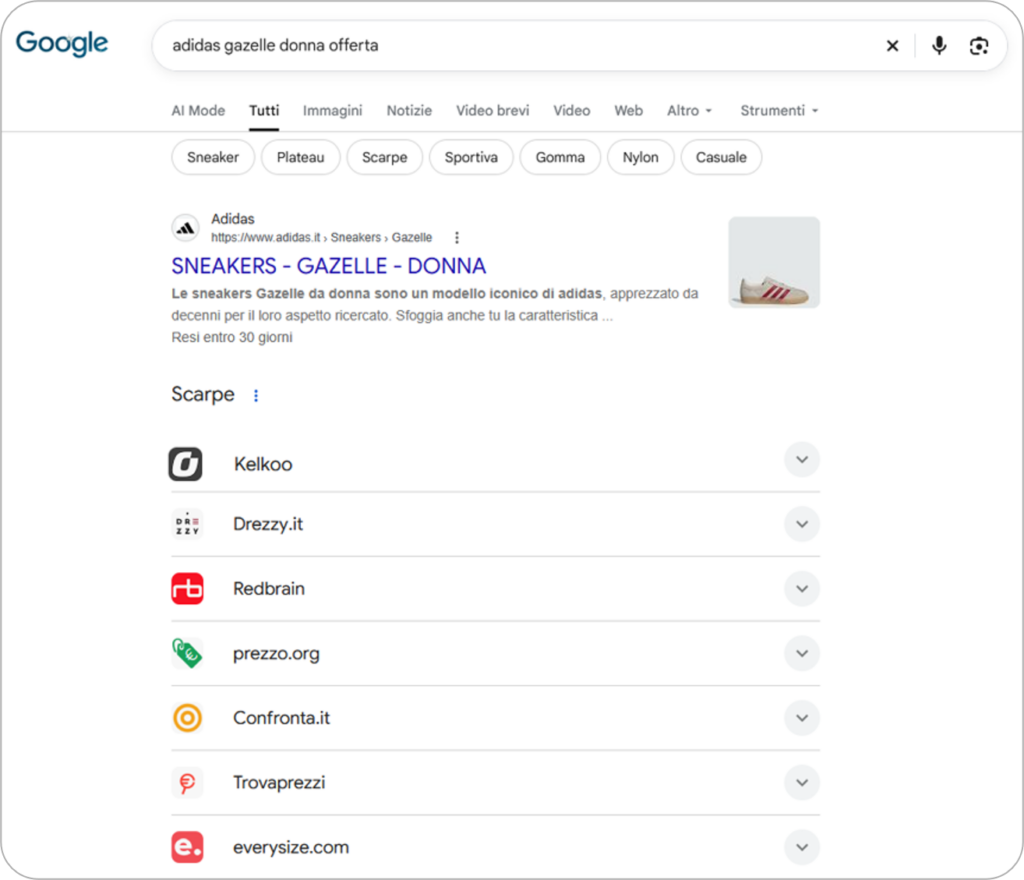
Fig 1: An example of Google’s new aggregator unit in Italy
Why Google is making this change
The new layout is Google’s response to a Digital Markets Act (DMA) ruling. On 23 July 2026, the European Commission fined Google €460 million for favouring its own services in Search, including shopping, hotels, transport and sports results (European Commission).
The Commission found that Google showed its own services (in the form of its specialised shopping units, both free and paid) more prominently, at the top of the page or with richer visuals and filters, while similar third-party services did not have the same prominence. Google had 60 days to comply or risk periodic penalty payments. Executive Vice-President Teresa Ribera summed up the principle: “The best products should succeed because they’re better, not because they’re owned by the company running the search engine.”
Google is critical of the changes it is making. Nick Fox, its Senior Vice-President for Knowledge and Information, said the changes “degrade the user experience for Europeans” by boosting online intermediaries at the expense of local businesses (Reuters).
This is the latest step in a long process:
| Date | What happened |
|---|---|
| 2017 | Following a Commission decision, Google lets all CSSs in Europe show ads on behalf of retailers in a dedicated unit |
| February 2024 | Google introduces aggregator units in the EEA, with units for product sites tested first in Germany, France, Czechia and the UK (Search Engine Land) |
| November 2024 | Google reports more than 20 changes to Search for the DMA, including dedicated units for comparison sites (Google) |
| 23 July 2026 | Notwithstanding the changes made, the Commission fines Google €460 million for self-preferencing in Search by embedding its own CSS on the SERP, and sets a 60-day deadline for compliance |
| 8 September 2026 | Google publishes documentation on regional differences in Search, covering the aggregator and supplier units (Google) |
| By 18 September 2026 | Search Engine Roundtable reports Google’s Ads Liaison confirming free product listings were removed from EEA results because of the DMA |
| 18 September 2026 | Google extends both units to local business searches |
| Around 25th September 2026 | End of the 60-day compliance period, if counted from the 23 July decision |
How the aggregator unit works for products
Only approved comparison services can take part in the aggregator unit. Merchants’ products are included on the results pages of the comparison sites that list them.
Who can appear. A comparison service must be approved as a vertical search service, provide the data Google needs, meet its quality standards and follow Search content policies (aggregator unit). For product searches, CSSs like Kelkoo are included through the CSS Center.
How providers are ordered. Google says it shows “what is most helpful to users for their queries” and has not published ranking criteria. Which CSS gets the expanded row is therefore decided by Google, query by query.
What makes a strong listing. Google advises aggregators to provide rich details such as images, descriptions and ratings, accurate titles, high-quality images and up-to-date prices and availability. Much of that starts with the product and offer data.
How the supplier unit is filled. Retailers and brands do not need to submit anything extra: they can appear using only what Google can crawl, and data feeds, where available, can enhance supplier results. Google has not said how suppliers are ranked (supplier unit).
Where it applies. Both units are available only to users in the EEA, so they are not shown in the UK, Switzerland or other non-EEA markets.
What it means for merchants
How you get your products in front of consumers in organic search is now based more on (a) Google’s crawling of your own site, for the supplier unit and (b) which CSSs you work with, for the aggregator unit. Here is how that plays out.
- The current version of free listings traffic has largely gone. If free listings were a meaningful source of EEA traffic, expect this to be replaced with traffic from the supplier unit, based on crawled information enhanced by feeds.
- Comparison sites are the route into the aggregator unit. Users can only find your products via the aggregator unit through the CSSs that take part in it.
- Shoppers using the aggregator unit arrive after comparing. Clicks in the aggregator unit lead directly to the comparison site, where shoppers can see several offers before choosing a shop. Price, delivery costs and the quality of your offer carry more weight at that point.
- Your own site still counts. The supplier unit and standard web results draw on crawled pages, so well-structured, indexable product pages remain worth the effort.
- Paid Shopping is a separate channel. Google’s guidance on these units does not mention Shopping ads. With free listings gone from Search, we expect paid Shopping and CSS partnerships to matter more for product visibility in the EEA.
What to do now
- Check your free listings performance in Merchant Center for each EEA market since mid-September, so you know what has changed.
- Keep your product feed complete and current: accurate titles, quality images, live prices and stock. Comparison sites, and the unit itself, depend on it.
- Keep your own product pages crawlable and indexable, since the supplier unit and standard results draw on them.
If you advertise with Kelkoo, check your performance and whether you remain online throughout the month. With shoppers finding your offers through our site, it’s important to remain visible there.
Want to understand what this means for your products? Talk to your Kelkoo Group account manager about your visibility across the EEA.
Sources
- Google Search Central: Aggregator unit in Google Search, updated 18 September 2026
- Google Search Central: Supplier unit in Google Search, updated 18 September 2026
- Google Search Central: Regional differences in Search experience, updated 18 September 2026
- Google Search Central: Latest documentation updates
- Google Search Central: New Search experiences in EEA: Rich results, aggregator units, and refinement chips, 15 February 2024
- Google CSS Center Help: How to start showing your product pages across Google
- European Commission: Commission fines Google €890 million for breaches of the Digital Markets Act, 23 July 2026 (€460 million of the total relates to Google Search)
- Reuters via Euronext: Exclusive-Google warns of lower quality as it revamps Europe search results to avoid EU fines, 8 September 2026
- Google: Supporting a dynamic online shopping industry in Europe, 8 October 2025
- Google: An update on our compliance with the DMA, 26 November 2024
- Search Engine Roundtable: Google Search Drops Free Product Listings From European Economic Area, 18 September 2026
- Search Engine Land: Google’s new search experiences in the European Economic Area, 15 February 2024